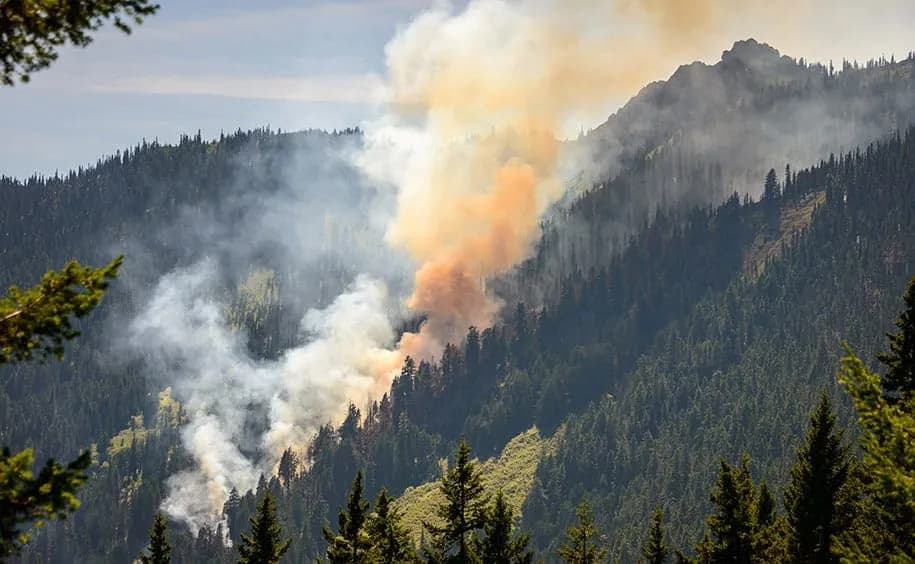
Detecting forest fires through Air Quality Monitoring
25 July 2024
Extreme temperatures and prolonged droughts have significantly increased the risk of wildfires, even in areas where they were not a major issue in the past.
Extreme temperatures and prolonged droughts have significantly increased the risk of wildfires across Europe, even in areas where they were not historically a major concern. The consequences extend far beyond the immediate fire zones — wildfire smoke can travel hundreds of kilometers, dramatically degrading air quality in distant cities and communities.
Air quality sensors as early warning systems
Air quality monitoring networks can serve as an effective early warning system for forest fires. When vegetation burns, it releases characteristic combinations of gases and particulate matter — including elevated PM2.5, PM10, carbon monoxide (CO), and volatile organic compounds (VOCs). A sudden spike in these parameters, especially when correlated with wind direction data, can indicate a fire event before it is visible or reported through traditional channels.
By deploying air quality monitoring stations in forested and peri-urban areas, authorities can detect these signature pollution patterns early and initiate rapid response protocols. The real-time nature of modern sensor networks means that alerts can be generated within minutes of a fire starting, potentially saving critical response time.
Tags