The Impact of urban development on air quality
28 March 2024
Rapid urban development comes with negative consequences for the environment and public health, with a major role played by particulate matter from construction.
Rapid urban development, while a sign of economic growth and modernization, comes with significant negative consequences for the environment and public health. Construction activities generate large quantities of particulate matter — dust from demolition, excavation, concrete mixing, and material transport — that can dramatically degrade air quality in surrounding areas. Fine particles (PM2.5 and PM10) are particularly dangerous, as they can penetrate deep into the respiratory system and cause both acute and chronic health effects.
Monitoring dust at construction sites
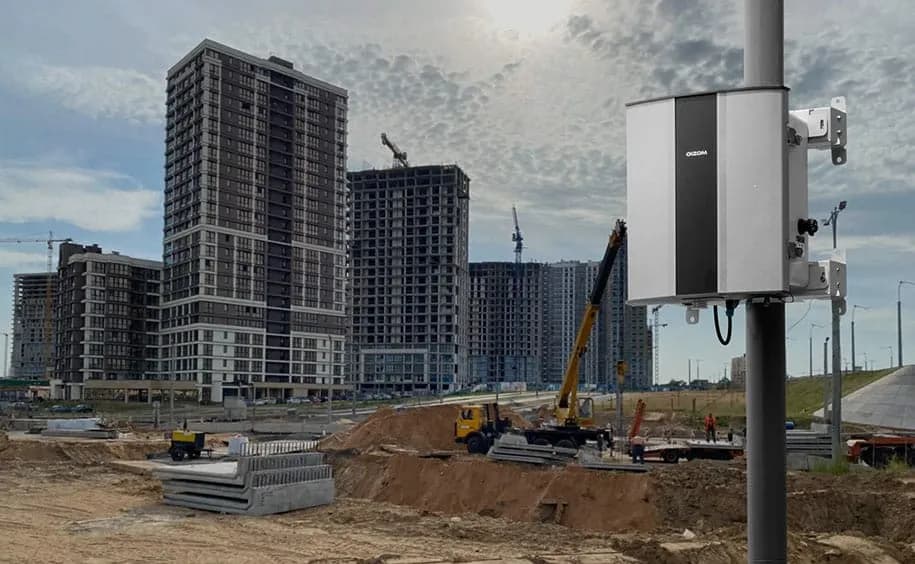
Oizom's Dustroid monitor is specifically designed for construction site environments, providing real-time measurements of PM1, PM2.5, PM10, and Total Suspended Particles (TSP). Its ruggedized enclosure withstands the harsh conditions typical of construction sites, while automated alerts notify site managers when dust levels exceed regulatory thresholds. This enables immediate corrective action — such as activating water sprinklers, adjusting work schedules, or implementing additional dust suppression measures.
As cities grow and construction activity intensifies, continuous dust monitoring at construction sites is becoming not just a regulatory requirement but a public health necessity. By providing accurate, real-time data, Dustroid helps construction companies and urban planners balance development needs with environmental protection.
Tags